
Milk Chews for Dogs: Yak, Cow Milk & Himalayan Chews Explained
If you have spent any time looking for a long-lasting, natural chew for your dog, you have probably run into a wall of names: yak chews, Himalayan chews, cheese chews, cow milk chews, milk bars. They all sound slightly different, and it is genuinely confusing to work out what you are actually buying.
This guide explains what milk chews really are, the honest difference between yak and cow milk, whether they are safe, how long they last, and how to pick the right one for your dog.

Milk Bar Chews
What Are Milk Chews (and Yak Chews)
Milk chews are hard, long-lasting dog treats made by drying milk into a dense, cheese-like block. The idea comes from a traditional Himalayan food called churpi (also spelled chhurpi): a hard, dried cheese that people in Nepal and Tibet have eaten for centuries as a portable source of protein.
The traditional recipe is beautifully simple. Milk is mixed with a little lime juice and salt, pressed into moulds, then dried or smoked over several weeks until it becomes rock hard. That long drying process is the whole point: it removes most of the moisture, which is what makes the chew so dense and satisfying for a dog to work at.
So when you see "yak chew", "Himalayan dog chew", "cheese chew" or "milk bar", you are usually looking at variations on the same churpi-style idea. The name on the packet often tells you more about marketing than about the product inside.
Yak Milk vs Cow Milk: The Honest Difference
This is where it gets interesting, and where a lot of shoppers get misled.
Yak milk is naturally higher in protein and fat than cow milk, so chews with a high yak content tend to be a touch denser and can last a little longer. That is the genuine difference, and it is a real one.
The "yak" label is not always what it seems
Here is the part the packaging rarely makes clear: pure yak chews are actually quite rare. Yak milk is in limited supply, so most "yak chews" on the shelf are a blend of yak and cow milk, and some are made mostly, or even entirely, from cow milk while still being sold under the "yak" name. The label almost never tells you the real ratio.
We would rather be straight with you. Our Milk Bars are openly made with cow's milk, not dressed up as something they are not. Cow milk chews are gentler, widely available, and for most dogs work every bit as well as the yak versions. The thing that actually matters is the quality and the honesty of what you are buying, not whether the word "yak" appears on the label.
Are Milk Chews Safe for Dogs?
For most healthy dogs, yes, and that is a big part of why they have become so popular as a natural alternative to rawhide. A few things worth knowing:
- Very low in lactose. The long drying process removes nearly all of the lactose, which is why many dogs with mild dairy sensitivity handle them well. If your dog has a known dairy allergy, check with your vet first.
- Naturally high in protein. Milk chews are a genuinely protein-rich treat, so they count towards your dog's daily intake. Factor them into the overall diet rather than adding them on top.
- Digestible, unlike rawhide. Milk chews break down far more kindly than rawhide, which is one of the main reasons owners switch.
- Dogs with a diagnosed dairy allergy
- Puppies under about 12 weeks, or dogs with dental issues or worn teeth
- Dogs on a strict calorie plan (these are protein-dense, so portion accordingly)
How Long Do Milk Chews Last?
This is the reason most people buy them, and the honest answer is: a good, hard milk chew lasts a long time. Ours are properly hard and dense, so they are built for real chewing sessions rather than being gone in two minutes. For a determined chewer that usually means a satisfying, jaw-working session rather than an instant snack, and for a gentler dog it can stretch out over several sittings.
Exactly how long depends on your dog: their size, their bite strength, and how enthusiastic they are. A power-chewer will always get through a chew faster than a gentle nibbler.
How To Choose the Right Milk Chew
A few simple pointers so you pick well:
- Match the size to your dog. The chew should be too big to swallow whole. When in doubt, size up.
- Think about chewing style. Strong, determined chewers want a hard, dense bar. Older dogs or gentle chewers may prefer to work at it more slowly.
- Always supervise. As with any chew, keep an eye on your dog and take it away once it is small enough to be a swallowing risk.
- Keep sessions sensible. A chew is a treat, not an all-day buffet. Short, supervised sessions are best.

Flavoured, functional Milk Bars
Beyond Plain: Our Flavoured, Functional Milk Bars
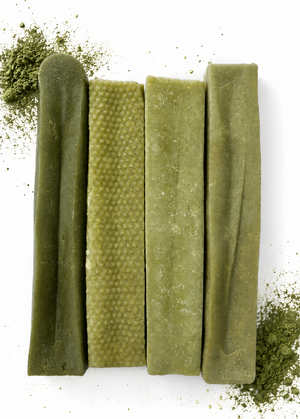
Most milk chews on the market are plain. Ours start there, then go a step further. Alongside our Plain (High Protein) Milk Bar, which is naturally rich in protein, we make a small range of flavoured bars chosen with a little something extra in mind:
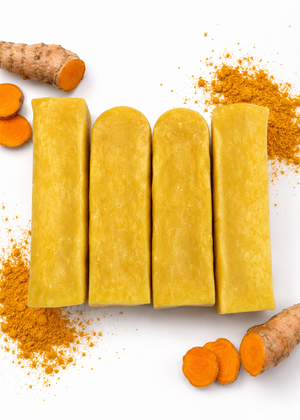
- Turmeric Milk Bar, with turmeric, an ingredient long associated with supporting joints.
- Blueberry and Strawberry Milk Bars, chosen with dental support in mind.
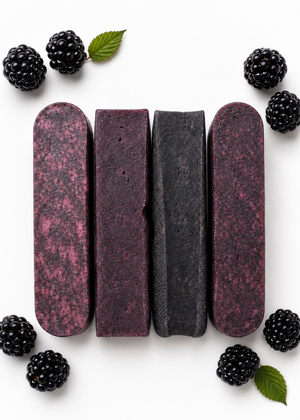
- Blackberry Milk Bar, with blackberries for natural fibre and antioxidants to help support digestion and immunity.
- Plus Peanut Butter, Coconut and Mint for a bit of variety your dog will love.
They are openly cow's milk based, hard and long-lasting, and a little more interesting than the standard bar. It is the same honest, quality-first approach we take with everything at FluffyFluff.
Shop Milk Bar ChewsMilk Chews FAQ
Are yak chews and milk chews the same thing?
Broadly, yes. "Yak chew", "Himalayan chew", "cheese chew" and "milk bar" all describe hard, dried milk chews based on the traditional churpi recipe. The main differences come down to the type of milk and the quality of the sourcing.
Are milk chews safe for dogs with a dairy sensitivity?
The drying process removes nearly all the lactose, so many dogs with mild sensitivity tolerate them well. If your dog has a diagnosed dairy allergy, check with your vet before offering one.
Do cow milk chews last as long as yak chews?
For most dogs, the difference is small. Yak milk is slightly higher in protein and fat, so very high-yak chews can be a touch denser, but a good, properly hardened cow milk bar is still a genuinely long-lasting chew.
What do I do with the last small piece?
Take it away before your dog can swallow it whole, then microwave it for around 45 seconds to turn it into a crunchy cheese puff. Let it cool before giving it back.
Milk chews are one of the nicest natural chews you can give a dog: simple, digestible, satisfying, and a real step up from rawhide. If you would like to try ours, honest about what goes in them, and made to last.
Browse Our Milk Bar ChewsThis article is for general information only and does not constitute veterinary advice. Treats should be given in moderation as part of a balanced diet, and chewing should always be supervised. If your dog has a health condition, allergy, or you have any concerns, please consult your vet.